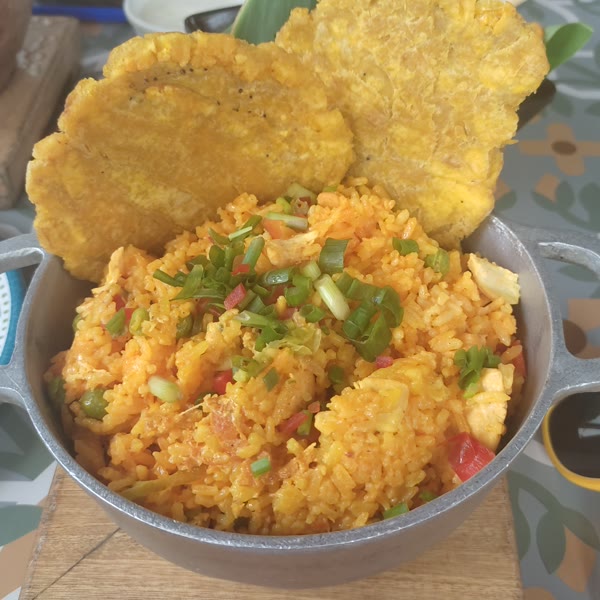
Asopao de Pollo
Thicker than soup, wetter than arroz con pollo — Puerto Rican chicken and rice stew with olives and capers.
Asopao is the hybrid that Puerto Rico does better than anyone — thicker than soup, wetter than arroz con pollo, and loaded with chicken, olives, and capers. It sits right in the middle of the Puerto Rican comfort food spectrum: a stew that's saucy enough to eat with a spoon but hearty enough to fill you up completely. The rice cooks directly in the broth, absorbing the tomato-saffron liquid and releasing starch that thickens everything into a glossy, stew-like consistency. Add briny olives and salty capers, and you've got a dish that straddles the line between comfort and celebration. Asopao is what you make when arroz con pollo feels too dry and sancocho feels too ambitious. It's the one-pot answer to a weeknight dinner that tastes like it took all day.
What is Asopao?
Asopao is Puerto Rico's beloved chicken and rice stew — a dish that exists in the space between soup and rice. The word comes from "asopar," which means to eat soup, but asopao is much more substantial than any broth with noodles. It's rice cooked in a tomato-based broth with chicken, olives, capers, and sofrito, simmered uncovered so the rice releases its starch and thickens the liquid into a rich, stew-like consistency. The result is something that's eaten with a spoon but satisfies like a full plate dinner.
Every Puerto Rican family makes asopao slightly differently. Some add peas, some add diced ham, some use shellfish instead of or in addition to chicken. But the core identity is always the same: rice, chicken, tomato broth, olives, and capers. It's the dish that bridges the gap between everyday cooking and special occasions — easy enough for a Tuesday night, impressive enough for a Sunday gathering. In Puerto Rico, asopao is what you bring to someone who's feeling under the weather, what you cook when you want to impress without overthinking, and what you crave when nothing else will do.
Ingredients
For 6 servings:
- 2 lbs chicken thighs — bone-in, skin-on for the best flavor. Boneless works too, but the bone adds depth to the broth.
- 1.5 cups rice — long-grain white rice. Don't use instant — it'll turn to mush before the flavors develop.
- 1/4 cup sofrito — the aromatic base. Homemade is best, but Goya frozen works in a pinch.
- 1 packet sazon — sazon con culantro y achiote for color and the signature orange hue.
- 1 cup tomato sauce — gives the broth its tomato base and body.
- 6 cups chicken broth — low-sodium so you can control the salt level.
- 1/2 cup manzanilla olives — the briny pops that cut through the richness of the stew.
- 2 tablespoons capers — salty, tangy, and essential. Don't skip them.
- 2 tablespoons oil — vegetable or olive oil for browning the chicken.
- Salt and pepper to taste
Mainland Swaps
- No sazon? Mix 1 tsp turmeric + 1/2 tsp garlic powder + 1/4 tsp cumin. It won't be exactly the same, but it gives you the color and base flavor.
- No capers? Use a small amount of chopped green olives as a substitute. The briny, salty quality is what matters.
- Want seafood asopao? Swap the chicken for shrimp and add them in the last 5 minutes of cooking. Shrimp asopao is a beloved variation.
Step-by-Step Instructions
Tips for Perfect Asopao
- Simmer uncovered. The lid stays off for the entire 30-minute simmer. This lets the rice release starch and thicken the broth naturally. Covering it would make the rice fluffy instead of stewy.
- Stir occasionally. Unlike arroz con pollo where you don't touch the rice, asopao needs occasional stirring. The starch settling on the bottom can stick and burn if you ignore it completely.
- Use chicken thighs. Breast meat dries out during the long simmer. Thighs stay juicy and tender, and the dark meat adds richness to the broth.
- Don't overcook the rice. Asopao should be thick but the rice should still have texture. Start checking at 25 minutes — overcooked rice turns the stew into porridge.
Want more recipes like this?
La Mesa Boricua — the complete bilingual cookbook with 30 authentic Puerto Rican recipes.
Get the Cookbook — $47Or start with the $9 Starter Kit